Monday, April 28, 2014

The Spook Who Sat by the Door
Reviewed by Pat O’Connell 

Pat O’Connell currently works as an Analyst for the Department of Treasury. He is the author of a book called Knight Hawk, and several magazine articles. He has served as the president of the Maryland Writers Association from 2000 to 2003.

“Get that damn movie out of the theaters and have all copies destroyed!  This movie will cause a race war.”  Richard M. Nixon (perhaps).

Okay, maybe Nixon didn’t say this, but who else had the authority to direct the FBI to make sure this film was removed from all theaters? And why was a copy of this movie impossible to get prior to its release as a DVD in 2004?

“The Spook Who Sat by the Door” is a 1973 film based on the 1969 novel of the same name by Sam Greenlee.  Dan Freeman, the film’s protagonist, is an intelligent and well-educated black man recruited by the CIA as its first black officer. The agency teaches Freeman guerilla warfare techniques, how to use weapons, how to make bombs, and how to disrupt communities and cause social havoc.

But instead of using Freeman as an agent, the CIA puts him in charge of the photocopy room as “Reproduction Section Chief.”  After five years as a glorified copy boy, Freeman resigns to start a career as a social worker in Chicago.  But unbeknownst to the CIA, Freeman uses his CIA training and turns it against the agency¾and also against the white-controlled society of the ʼ60s and ʼ70s¾by recruiting frustrated angry black youths and training them to become freedom fighters. 

If you were around in 1973, think back to the times: the previous decade included the assassination of black leaders Malcolm X and Dr. Martin Luther King, Jr., a massive urban uprising in Watts, California, and the launch of the Black Panther Party. Black Power was a rallying cry and racial integration was a fledgling concept in many parts of the country.

Although this movie is not particularly well made, it has a powerful message and is hard to judge.  It is passionate and racially charged—promoting violence to solve problems of social inequality.   

On one hand, I can see why the movie was banned. Perhaps allowing it to be viewed would have ignited race riots along the lines of Watts, a six-day melee in 1965 that resulted in 34 deaths and 1,032 injuries. On the other hand, the movie is worth seeing because of its perspective on oppression, social inequity, violence, and freedom.

The film feels dated—with references to “negroes” and “whitey” and characters in fitted jackets, wide lapels, big hair, and the long sideburns of the 1970s—fashions popularized in the hit movie “Shaft” released two years earlier. The vintage nature of “The Spook” lessens its threatening edge; at times, it even seems quaint. (By the way, its soundtrack was composed by the great jazz/funk artist Herbie Hancock. And the film’s director, Ivan Dixon, starred in the 1960’s sitcom Hogan’s Heroes as staff sergeant Kinch, the communications specialist.)

But I digress—and I don’t want to trivialize the serious issues the film highlights. Trying to solve social problems through violence and ethnic cleansing is still going strong in the world today.  

So, what do you think?  Is our nation ready to watch and discuss this movie?

Monday, April 7, 2014


Of Hearts and Hope: Three Perspectives on American Youth

By Vicki Meade

Young Hearts and Minds, a program of three short documentaries which was shown at the Annapolis Film Festival, is all about hope. 

The actual subject matter involves blind teenagers, funerals for the homeless, and potential high-school dropouts. But the real-life stories—not always pretty, sometimes heart-wrenching—left me feeling great about our young people.

“The Potter’s Field” by Edward Heavrin and Nick Weis (42 minutes) chronicles high school students in Louisville, Kentucky, who volunteer to give burial services for homeless and indigent members of their community. As a point of contrast, the film also describes how two of the nation's largest cities, Chicago and New York, dispose of their deceased poor.

Early on we see pine caskets stacked in a U-Haul, men in overalls transferring boxes into a mass grave—no mourners anywhere.  A teacher gets the idea to recruit students as volunteers—boys in blazers and ties, girls in plaid skirts and white sneakers—who serve as pall bearers, say quiet prayers, and sing “Amazing Grace” for people they’ve never met. “How could I live a life and end up having no one?” one boy wonders. “It’s a scary thought.”

The film includes interviews with a homeless ex-sergeant who did tours in Iraq—and now, his speech halting, teeth broken, shoes falling apart, he paces the streets and worries about his future—the personification of unknown people the students help bury. We soak up images of wind-swept cemeteries and yawning dirt holes—and witness tenderness, such as the businessman who finds a homeless man living in his basement and houses him until he dies, and the staffer at Hart Island, where New York’s Potter’s Field is located, who tears up over a letter written long ago by an inmate who helped bury the indigent.

In “Teach Me to Sea” by Mara Bresnahan (39 minutes), a blind teenager says, “There’s something exciting about not knowing what’s coming,”a statement that encapsulates the film’s spirit. Here are two dozen students at the Perkins School for the Blind near Boston planning a senior trip to Cozumel, Mexico—a cruise packed with things they’ve dreamt about, from karaoke and discos to splashing in the sea.

We get to know Ashley, born with shortened limbs and no eyes; Eliza, a healthy child who rode horses, excelled at soccer, and played guitar until a mysterious “brain attack” left her blind and forgetful; Travis, who gradually lost his vision starting at age 6 months. Their fears are the same as anyone’s taking a cruise for the first time—sea sickness, sharks, what if the ship hits some rocks? But they bubble with joy, acting like teenagers everywhere.

We see them petting a baby shark, riding in a pedicab, kayaking, swimming, playing bingo, singing, dancing, laughing. “People with disabilities can party!” one student exclaims.  I imagine these kids made the cruise more fun for everyone on that boat. Fast-forward to prom, then graduation—with Ashley, whose legs are malformed and half the normal length, as valedictorian. “You couldn’t create such an unusual combination of people if you tried,” she says proudly of her classmates. She’s heading to college to study counseling—and when her mom says, “Ashley will do great things,” I believe her.

“Doing It for Me,” by Precious Lambert and Leah Edwards (25 minutes), explores the dropout crisis in Washington, D.C., from a young person’s point of view. Egged on by one girlfriend, two others work toward high school graduation—and as I watched, I was swept back to my year as a writer with the D.C. Public Schools—with a student body that is 70% African American and overwhelmingly low income (three quarters qualify for free lunch).  Once, a guidance counselor at a grade school in the poorest corner of the city told me his biggest challenge was kids with no hope. “Some can’t envision a future,” he said. “They can’t imagine being anything when they grow up.”

These girls fight inertia and decide to continue their education—each in different ways, such as Job Corps—but all resulting in a diploma. And their excitement about ambitions they plan to pursue—college, nursing—is sharpened by having come so close to missing out.  

Annapolis-based freelancer Vicki Meade has 25 years’ experience in communications for health care, business, and technology. She has written for many magazines and websites and is an adjunct instructor of writing at the University of Maryland Baltimore County.

Wednesday, March 26, 2014


The Language of Love
by Charles Green


This is an amazingly simple, yet powerful film.  In nine and a half minutes, one actor, in a monologue, reveals his love for his best friend, and all the conflicted feelings that comes with it.  As part of a French language exam in an Australian school, Charlie has to write a letter to his best friend, in French of course.  After some jokes about language, including one on how the verb baiser can mean two related but very different things (which can get you in trouble if you confuse the two), he starts talking about his friend Sam.  It should be stated that Sam is a boy.  Seated right in front of Charlie at every class, he has an extremely close relationship with Charlie, telling him everything, including his parents’ ugly, painful divorce.  The pain Charlie feels for Sam having to go through this experience is obvious on the young man’s face; this is a sensitive, thoughtful boy.  So when he suddenly blurts out, “I’m in love with Sam”, it seems perfectly natural, and yet of course, so many people would say it’s not.  Now he has to decide whether to tell his best friend or keep his feelings bottled inside.  His decision at the end is wonderful, and makes a great answer for his exam.

Charlie is incredibly articulate, probably more so than most young people, but using just his words he manages to connect us to him on a powerful emotional level.  He offers some insightful moments, such as wondering if he’s being selfish in holding back this secret.  After all, Sam doesn’t keep anything from him, so why shouldn’t he do the same? We laugh with him when he remembers how he became assistant librarian: because he didn’t swipe the sex ed books, which leads to a funny riff on gonorrhea and King Lear.  We cry when he worries about Sam’s possible reaction; will his best friend think he’s a freak?  We wince when he remembers the taunts his classmates make when, during a trip to the beach, he offers to put sunscreen on Sam’s back: “Charlie’s a poofter.”  It’s language in spoken form that allows him to connect with the audience, just as it’s language in written form that allows him to (hopefully) connect with Sam.  It’s a brilliant play on the title.

The film focuses almost entirely on Charlie, with a few glimpses of Sam, making for a tight character study.  At first it was difficult to know whether Charlie’s speech represents what he’s writing for his exam, or if it’s what he’s thinking while trying to answer, but that becomes clear fairly soon.  In any event, it’s a minor quibble, especially considering how much the film accomplishes in such a short time.  Incredibly moving, well-crafted and acted, The Language of Love is definitely worth seeing, regardless of how you feel about homosexuality.  In any language, love is universal.

Charles Green is a freelance writer and editor based in Annapolis.  His book reviews appear in several publications, including Publishers Weekly.

Thursday, March 13, 2014


The Silkies of Madasgar
Filmmaker David Evans

by Nadja Maril


Initially when I think of going to the movies, I think of entertainment. But the medium of filmmaking can provide a powerful platform for education and social change.  Certainly the story of the women who comprise the Federation of Silk Weavers of Madagascar— a small island  nation off the  Southeast coast of Africa in the Indian Ocean—is a tale that renews ones faith in the ability of a small group of craftspeople to create a pocket of social and economic prosperity within an impoverished nation. 
                
Together we are like a rock
Separated we are like sand  
is one of the several proverbs shared with viewers with words on the screen. 
                Beautiful cinematography enhanced by a soundtrack that features native drumming and songs makes this film a pleasure to watch. It’s a documentary that captures the pulse of living in the village of Sandrandahy with the simple format of having weavers tell their stories and how being a member of the Federation of Silk Weavers has changed their lives.
While silk weaving has long been a tradition, it was once created solely for the purpose of shrouding the dead. Very fine shrouds were created to wrap in multiple layers around the corpses of ancestors and a specific ritual followed that involved re-visiting the corpses, parading them in the sunlight, and adding additional layers of silk years after their initial “burial”.
Now the cottage industry that begins with of gathering cocoons from the forests made by silkworms living in Tapia trees creates jobs for 900 people.  Getting the silks ready for weaving is a multi step process that involves boiling the cocoons, washing, dropping, drop spindling, dying, spinning, and weaving.  Colorful scarves are created that are now sold at the Santa Fe International Folk Art Market. The market, a three-day yearly event, represents the folk art of 150 countries. Only 33% of the artists who apply to the market are accepted.  The first year they participated, the Federation of Silk Weavers from Madagascar made $32,000, which for them represents a sum of money that would take them 15 years to earn.
Seeing all the handsome weavings and the labor and dedication involved in creating them, made me want to own or at the very least caress and handle one of those lovely textured scarves in my hands.
Filmmaker David Evans will be a featured guest at the Annapolis Film festival this month, and perhaps he will shed some light on who or what lead to the idea of creating colorful scarves and other items of silk for international sale.  (The film tells the story of how the weaving got to the Santa Fe International Folk Art Market but not what or who got the silk weaving crafts industry started initially. ) Towards the end of the film, the Federation was using some of their profits to built three bungalows for tourists in an effort to promote eco-tourism.  Are they available for rental today?
How long did it take, from inception to completion, to create this 30 minute gem?  Reading the credits at the end of the film I saw the names of dozens of people.  What is the story behind the making of this particular movie?
One of the benefits of attending the Annapolis Film Festival is not only the opportunity to see so many wonderful movies in one weekend but to interact with the filmmakers. So don’t miss it! Buy your tickets today.

Tuesday, March 4, 2014

In “Mondays at Racine,” Breast Cancer
Patients Bond at a Beauty Salon

By Beth Rubin

In “Mondays at Racine,” an award-winning short documentary by Cynthia Wade, sisters Rachel and Cynthia throw open the doors of their Long Island beauty salon one Monday a month to breast cancer patients in need of infusions of R and R. While coping with the disease’s devastating physical and emotional effects, the women handle the day-to-day life-altering challenges with intelligence, poise, and good humor. But chemo-related hair loss pushes them to the brink. 
In the welcoming arms of the empathetic salon owners, whose mother, we learn, became reclusive as her self-image as a woman diminished after her own breast cancer diagnosis and treatment, members of this tight sorority gather to shed their locks and inhibitions and to reclaim their femininity. Through spa treatments, makeup tips, abundant hugs, and quasi-group therapy, they regain their identities as   empowered women who just happen to have cancer. Unburdening themselves, they share the inevitable emotional  fallout from breast cancer—how it affects their self-image,  sexuality,  relationships with their spouses and children, and hopes for the future—and form an impervious bond.

The opening scene in the salon introduces us to a handful of women of different ages in various stages of treatment and hair loss. They try on hats, banter, and laugh unselfconsciously as if they’re meeting for tea or a girlfriends’ getaway. The mood changes when the women begin to tell their stories.  

Cambria is married with a loving husband and son, and is in the process of adopting a second child. Her diagnosis, Stage 3 metastatic breast cancer, may well prevent her from completing the adoption. We follow her into the shower and watch as her hair —“women’s crowning glory”— collects in the drain. 

In her late-fifties, Linda has outlived her original diagnosis by 17 years. She’s sick and she’s tired—of cancer, of multiple rounds of chemo, of feeling lousy, of her husband’s inability to give her the love and support she needs. “I have nothing left. I’ve lost my hair, I’ve lost my breasts.” She reclaims her power in a pair of scenes that rival much of what is hawked as drama and pathos in full-length, big-budget films. 

We accompany Cambria and Linda as they make difficult medical and personal decisions, anguish and pleasure intermittently writ large on their faces. We applaud their strengths, feel their pain, and cheer their victories. We know these women. They are us. If we have not yet walked in their shoes, they are our sisters, mothers, daughters, or best friends.
This is not a film to be avoided because it arouses uncomfortable feelings. It should be seen by all women—and by the men who love them.

Thursday, February 6, 2014

A review of "The Great Beauty"

 "The Great Beauty, a shimmering coup de cinema to make your heart burst, has won the 2014 Golden Globe for best foreign film".  The Telegraph.

The Great Beauty

By Beth Rubin

Jep Gambardella (Toni Servillo), a cynical yet vulnerable  journalist-novelist and man about town,  celebrates his 65th birthday with a menagerie of friends and hangers-on at his penthouse terrace overlooking the Colisseum. (Doesn’t everybody?)  Paying homage to Fellini ( “La Dolce Vita,” “Satyricon,” and ”8 ½”) , a conga line of inebriated, coke-snorting partygoers with outlandish body accoutrements and vacant stares, snakes around the terrace. Here, Grand Guignol meets the Theatre of the Absurd in blazing color. Debonair in his oiled hair, primary-color  blazers and tan slacks , pocket square just so, Jep hasn’t had a hit in 40 years since his novel, “The Human Apparatus,”  took  the literary scene by storm.  He’s “laughing on the outside, crying on the inside,” as the old song goes, hanging on in a netherworld which alternately excites, chafes, disappoints, and bores him.

Then he learns that the love of his life has died, and reality comes a knocking.
What follows in writer-director’s Paolo Sorrentino’s brilliant homage to Rome─its sights, citizenry, and tourists; classicism and debauchery; social, political and religious institutions─are a series of interwoven vignettes, all lushly filmed, that illuminate Jep’s coming to terms with his mortality. He examines assumptions old and new in a most poetic way, by strolling through Rome’s deserted pre-dawn streets, passing by former haunts and revisiting old friends; and replaying liaisons that no long satisfy.  What’s it all about, Jep? 

Owing to masterful  writing, directing, acting, and luscious photography, Jep’s  quest to make sense of, or, at least, find meaning in his life, must inevitably resonate with the voyeurs who’ve plunked down $10 or more to be a part of this phantasmagoria for  142 minutes.

“The Great Beauty” is a surreal, visually rich feast that should satiate most, if not all, discriminating filmgoers over the age of twelve.
Beth Rubin is a longtime Annapolis writer-author and film enthusiast who writes frequently about the arts.  www.bethrubinauthor.com

Sunday, January 19, 2014

Interview with Sheila Dennin, Writer/Director of the Independent Short Film “Red Flags”


Annapolis-based freelancer Vicki Meade has 25 years’ experience in communications for health care, business, and technology. She has written for many magazines and websites and is an adjunct instructor of writing at the University of Maryland Baltimore County.

 
Who can’t relate to the discomfort of being stuck on a terrible blind date?  In her funny and poignant 12-minute short, “Red Flags,” filmmaker Sheila Dennin, a Crofton resident, shows us what it’s like to keep meeting Mr. Wrong—and to try to make the best of it.
Dennin, who has worked as a writer and director in film, video, and multimedia for more than 20 years, is president of Mary Margaret Productions, Inc., in Washington, D.C. She recently talked about the film, which was shown at the Annapolis Film Festival Shorts Crawl in September, with Annapolis freelance writer Vicki Meade. You can see the film here on YouTube: http://www.youtube.com/watch?v=Wd5uR-UsyYY
Where did you get the idea for this film? 
When I was single, I went on pretty much all those dates. I was in my thirties¾that period in life when all your friends are married and they want you to join them in their misery. So they start fixing you up with people. Anyway, I would go on these dates, and afterwards I would call my dear friend Maureen Ryan [producer of “Red Flags” and of the Academy Award winning documentary “Man on Wire”]. Often, I was in tears, and she’d say, “Sheila, you’re gonna use these horrible experiences someday.”
So, the characters are based on real people?
Well, I married the guy in the park. That character is based on my husband, who I met at an awards event in Boston. He’s in software sales now, and at the time he worked for a web hosting company. We just celebrated 12 years of marriage.
And the guy who wanted to trim Tracy’s nose hair¾I was dating someone who did that to me. We were sitting together, having a pizza, and he stopped and gazed at me. I thought, oh, he thinks I am fabulous! But no, that wasn’t it.
What about Tracy—the lead character?
She is all women. Think about it—we don’t know anything about Tracy. She actually has very little dialogue. We fill in the blanks about who she is, because she is us. She tries so hard to be the good person, she doesn’t judge these people or react to them inappropriately. And, frankly, Tracy is me.
What do men say about the film?
Men love this film, too. They relate to Tracy’s situation–– it’s about the universality. The best comment I ever heard after a screening was when a guy came up to me and said, “This is why I go to the movies.”
Tell me about writing the script.
 The idea gestated forever. Maureen and I were working together over several years doing public health films. She teaches short film, and she said, “Why don’t you make one?” She started reminding me of these horrible dates, and she said, “I always remember the toothpick guy.” I got in the shower, imagined a scene, and things started to click. I sat down and wrote the script in four hours. I had actually written the whole thing in my head already, so when I got to the page, it just came out.
What was the casting like?
The casting session was incredible. In one day, we saw 50 people. I was very nervous about who would play Tracy¾I wanted someone that people like instantly because of her energy. Not stellarly gorgeous, but attractive in a way that would have us believe she might still go on blind dates. We had this wonderful parade of talented actresses come in, and toward the end of the day I’m thinking, we’ll never find her. Then this woman, Nell Gwynn, walks in, kind of harried looking, with tattoos. She read with the nose-hair guy, and it was magic.
How did rehearsals and shooting go?
I didn’t do any rehearsing. I just wanted to roll—I didn’t want to lose the performance. For example, toothpick guy, the way he carried off the whole, “isn’t it awesome that you’re sitting here with me” ¾it felt very natural and real. And directing Nell was unbelievably easy, like turning dials. We shot the film in New York City with a 39-person crew, and everyone worked for free.
What was the hardest part of making the film?
 Two things. First, making sure the ending worked. No one has ever told me they saw the ending coming, and that is incredibly satisfying. In fact, some people get mad at me. Which is cool, because it means this character I created really got to us.
And the second?
Putting in the red flags. The idea was, you’re dating this guy and totally ignoring red flags¾these red flags hit you and you go, ”oh, stop it,” but the flags get bigger and bigger, and you push them aside and continue on with the date. So, how to convey that?  We decided to do animation, and I didn’t have the money for 3D animation. I found these guys in New York who said, “Set up the scene and we’ll take it from there.” In most of the scenes, we knew in advance what we’d do with the flags. The animators’ big surprise to me was when the flags come out of the mouth and ear of sob-story guy. People always laugh at that.
 I’ve sat in the audience and experienced the film with viewers, and at that point, everyone settles into their chairs and goes, “Oh, I understand the world we’re in.”
Did you have a key message you wanted to get across?
First and foremost, it’s entertainment. My intention was to have people laugh. But there’s also this idea: we never know what someone else thinks of us. How many times have you chosen to go out on a date, and it went unbelievably well, yet you never hear from the person again? Who knows why?  

Sunday, December 15, 2013

 
Pat O’Connell currently works as an Analyst for the Department of Treasury. He is the author of a book called Knight Hawk, and several magazine articles. He has served as the president of the Maryland Writers Association from 2000 to 2003.

Progressive Snack Theater…and getting into someone’s shorts.  Who knew it could be so deliciously fun and entertaining?
Back on September 22, my wife and I joined dozens of dozens on West Street in Annapolis for a progressive snack theater event, the Annapolis Shorts Crawl 2013.
We all gathered at the Loews Hotel to get our tickets and to join our groups…and then we were off like mobs of Trick-or-Treaters to O’Callaghans, 49 West, El Toro Bravo, Stan & Joe’s, Metropolitan, and Crush…(FYI all of these places are on West Street in Annapolis.)
The venues for these short films made watching enjoyable.  It was so nice to check out new haunts that otherwise I wouldn’t know about.  Before we started watching we grabbed snacks to munch and drinks to sip.  (These were supplied by each venue as part of the registration fee.)
The films, OMG, were soooo good!  Some were informative. (Did you know that before becoming a great basketball star, Wilt Chamberlain was a Borscht Belt Bellhop at a resort in the Catskills?) 
Some were thought provoking.  One movie talked about a prosperous neurologist who found the meaning of life on rollerblades; another movie was of two young brothers who steal fireworks to impress girls.
Two humorous movies were on karma.  One illustrated the cycle of life on the food chain and ultimate karma from Mantis to Man, and back to Mantis. The other played with the karma of reincarnation.  (How would you like to come back as a rich mosquito?)
Two shorts were real-life funny…imagine bad blind dates and all the red flags that made you wish you were with someone else…or how about  being a young girl with an imaginary friend who’s a knight, and it’s time to shop for your first training bra?
For me the funniest of them all was of a kidnapping of a 10-year-old girl that goes terribly wrong for the inept kidnappers.  If you liked Home Alone, you’ll love Penny Dreadful.
All in all, the Crawl was a ball…and it was all for a good cause. The funds earned from this will go towards the Annapolis Film Festival, March 27 thru 30, 2014.  Save that weekend and don’t miss it.
For more information check out info@annapolisfilmfestival.net  Enjoy!

Sunday, November 17, 2013


Soundtrack Reinforces the Comic Poignancy of Thanks for Sharing

Reviewed by Nadja Maril

“Thanks for Sharing” is the expression I tend to use when someone has given me way too much personal information and I’m trying to be polite. But when you are an addict attending a support group, part of the healing process is sharing.  Honestly verbalizing your feelings helps facilitate recovery.

The majority of characters in the movie  “Thanks for Sharing” directed by Stuart Blumberg, screenplay by Blumberg and Matt Winston, are doing just that—attempting to recover from addiction.  These addicts played by actors Mark Ruffalo, Tim Robbins,  Josh Gad, and  Alecia Moore are not your typical drug, gambling, or alcohol addicts. They are addicted to sex.  They are so addicted to sex that they are unable to successfully function in their daily lives. A ride on the subway brings the temptation of other people’s bodies to rub against, while a computer provides access to tempting pornography sites. Even a television is a forbidden item for a sex addict in recovery as it might provide entertainment, which could awake subdued desires. 

Tim Robbins plays Mike, group leader and mentor/sponsor of Adam played by Mark Ruffalo, who has been in recovery and has been celibate for five years. Adam is finally ready to attempt a committed relationship with a woman.  The object of his desire is Phoebe, played by Gwyneth Paltrow, who has her own challenging personal issues. Five years earlier she had breast cancer and has prosthetic breasts. Cancer free, she is fixated on healthy living, which includes strenuous exercise and a vegetarian diet. Her previous boyfriend was an alcoholic and on their first date she tells Adam she doesn’t want to date another addict and asks whether he ever had a drinking problem. While this logically would have been the perfect time to come clean with the story of his sex addiction, Adam is too infatuated with Phoebe to risk losing the opportunity for intimacy so early in their relationship.

The push and pull of the relationship between Adam and Phoebe and Mike’s relationship with his own family take center stage in this well constructed screenplay that is both humorous and sad, but it is the relationship between nymphomaniac Dede and food and sex obsessed ER doctor Neil which really tells the story.

The unlikely friendship between the tattooed punk style beautician played by Alecia Moore (also known as singer/song writer Pink) and the young overweight Mama’s boy physician played by Josh Gad includes the gift from Dede of a pink bicycle that enables Neil to travel around the city of New York without the need for expensive taxis or the off limits subway.  It’s while he’s on that bicycle, drenched in perspiration because he is way out of shape and you are routing for him to succeed in reaching his goals, that I first became consciously aware of the film’s soundtrack  and how much I liked the music.  Soundtrack music can create mood, suspense, and elation.  It can bridge the passage of time and convey the connections forming between the characters. But movie music is not necessarily music you want to listen to on its own.   The “Thanks For Sharing” soundtrack music is notably good.   So good that I made a mental note to purchase the soundtrack for future listening and I did. The lines in “This Year” as performed by the Mountain Goat,  This time I’m going to make it  through this year if it kills  me, reinforced the efforts of the characters seeking to control their addiction and improve their lives. At the movie’s end when I heard Billy Bragg sing Tender Comrade and the lines,  What will you say of the bond we had, tender comrade? Will you say that we were brave as the shells fell all around us?, the message of the bonding that developed between the characters was reinforced.

After purchasing the soundtrack online and starting to write this review I took a look at the soundtrack notes and learned just how important the soundtrack songs had been to writer/director  Stuart Blumberg. He writes, “this movie’s soundtrack is heavily indebted to songs that have meant a lot to me over my life…The ones I chose were united by a common element: the primacy of the voice. Literally, their human voice. I wanted those voices to stand as counterpoint to the voices of characters, who throughout the movie, bare their souls in the safety of the room of their 12 step programs.”  His song selection did not go unnoticed.

Thanks for Sharing premiered at the 2012 Toronto International Film Festival and was released in the United States last month (Sept.20, 2013). I recommend seeing the film and I recommend buying the soundtrack.

Tuesday, October 22, 2013


Blue Jasmine
Charlie Greene
As a huge Woody Allen fan, I came to Blue Jasmine with a lot of excitement, and left feeling disappointed.  While he captured the incredibly beautiful scenery of San Francisco and New York, I didn’t care about any of the characters, especially the main one, Jasmine.  In fact, she may be the most unlikable character I’ve ever seen in a Woody Allen film.  Worse than her self-destructive behavior, her self-delusion and snobbery was intolerable to watch.  Feeling so smugly superior to everyone around her, she has no qualms about lying to her boyfriend about her past, expecting to regain her wealth and social standing.  Of course, Allen’s made other movies with morally ambiguous characters, even a few who get away with murder, and I’ve enjoyed watching those characters.  Deconstructing Harry springs to mind.  What’s the difference?
The title character in Harry was a wreck of a human being, making extremely poor choices and suffering the consequences.  But in the film, he was a talented writer who literally brought the characters in his stories to life.  He was also, to some extent, aware of his failings.  He was a loser, but there was an endearing quality to him that, if it didn’t make me entirely like him, I at least felt some sympathy towards him.  Plus, Woody Allen is a wonderfully gifted comic actor, and watching him go through these crises of his own making, with such wit, makes me laugh every time I watch it.
Jasmine had no such endearing qualities to her.  The only gift she possessed was for self-deception.  She had no insight into her problems, and never grew over the course of the story.  Her only change was to become worse off than when she started.  In some way, my passionate dislike of Jasmine is a testament to Cate Blanchett’s acting ability.  In fact, until I spoke with other friends who had seen the film, I had no idea Blanchett was in it.  Her ability to completely submerge herself into such an unlikable character is a true testament to her talents.
Still, Blue Jasmine let me down.  Woody Allen’s made many films over the course of his more than 50 year career.  Many of them, like Hannah and Her Sisters, Mighty Aphrodite, and Annie Hall, are wonderfully creative, funny, and touching.  In so many of his films, he tries out new approaches to telling stories, and many times, they work brilliantly.  Blue Jasmine, sadly, doesn’t.  It seemed to lack Allen’s usual spark or inventive qualities.  It felt like a tired film that any other director could have made.  Maybe it’s unfair to come to one of his films with such high expectations.  He’s certainly made other films that, for whatever reason, didn’t quite work.  So I have no doubt that his next film (or the one after that) will be the usual Woody Allen success.
Charles Green is a freelance writer and editor based in Annapolis.  His book reviews appear in several publications, including Publishers Weekly.

Monday, September 23, 2013

A review of THE BUTLER for Annapolis Film Festival Fans!

The opinions and views expressed here are those of our guest bloggers and are not necessarily those of the Annapolis Film Festival.

The Butler
By Beth Rubin
Ken Burns meets Forrest Gump in the bio-pic, “The Butler,” written by Danny Strong (“Game Change”) and directed by Lee Daniels (“Precious”). The seed for the full-length drama germinated from a 2008 Washington Post article by Will Haygood, about White House butler Eugene Allen who served eight presidents, beginning with Ike in 1952. In this fictionalized, fast-paced film, we meet Cecil Gaines, a deus ex machina for presenting a compressed version of the civil rights movement. For that alone, the film (even when it deviates from the factual or plausible) should be required viewing— for anyone who wasn’t around in the ‘60s and ‘70s, and as a reminder for those of us who were. 
Young Cecil winds up in the White House mess, with its all-black staff and plantation model, after enduring unspeakable trauma and humiliation living on a Georgia cotton farm and working in a southern hotel. But he keeps taking it—his face, a blank slate; his voice, steady. In fact, he enjoys his subservient role, to the consternation of his wife Gloria (Oprah Winfrey). One son, Louis (David Oyelowo), joins the civil rights movement, creating a widening schism between father and son while the other, “good” son, Charlie (Elijah Kelley) does all the right things and fades into the wallpaper of the Gaines home before meeting a tragic end.
Like Forrest Gump, activist Louis is front and center for every major civil rights event, never missing a sit-in, Freedom Ride, or Black Panther rally. This guy gets around! Hell, he’s even with MLK at the Lorraine Motel when King is assassinated.
The acting, top to bottom, is as good as it gets. Winfrey shines as the loving, steadfast, hard-drinking and chain-smoking wife who wishes her husband worked normal hours. Liev Schreiber as LBJ, John Cusack as Richard Nixon, and Alan Rickman as a somnolent Ronald Reagan shine. Jane Fonda’s cameo performance as Nancy Reagan is spot on. (One has to wonder what Nancy Reagan thinks of Hanoi Jane’s interpretation.)
The Butler is very good entertainment. But leave your nitpickers at the popcorn stand.
                                                ###
Beth Rubin is a longtime Annapolis writer-author and film enthusiast who writes frequently about the arts.  www.bethrubinauthor.com

Sunday, April 14, 2013

Hello Film Fans,
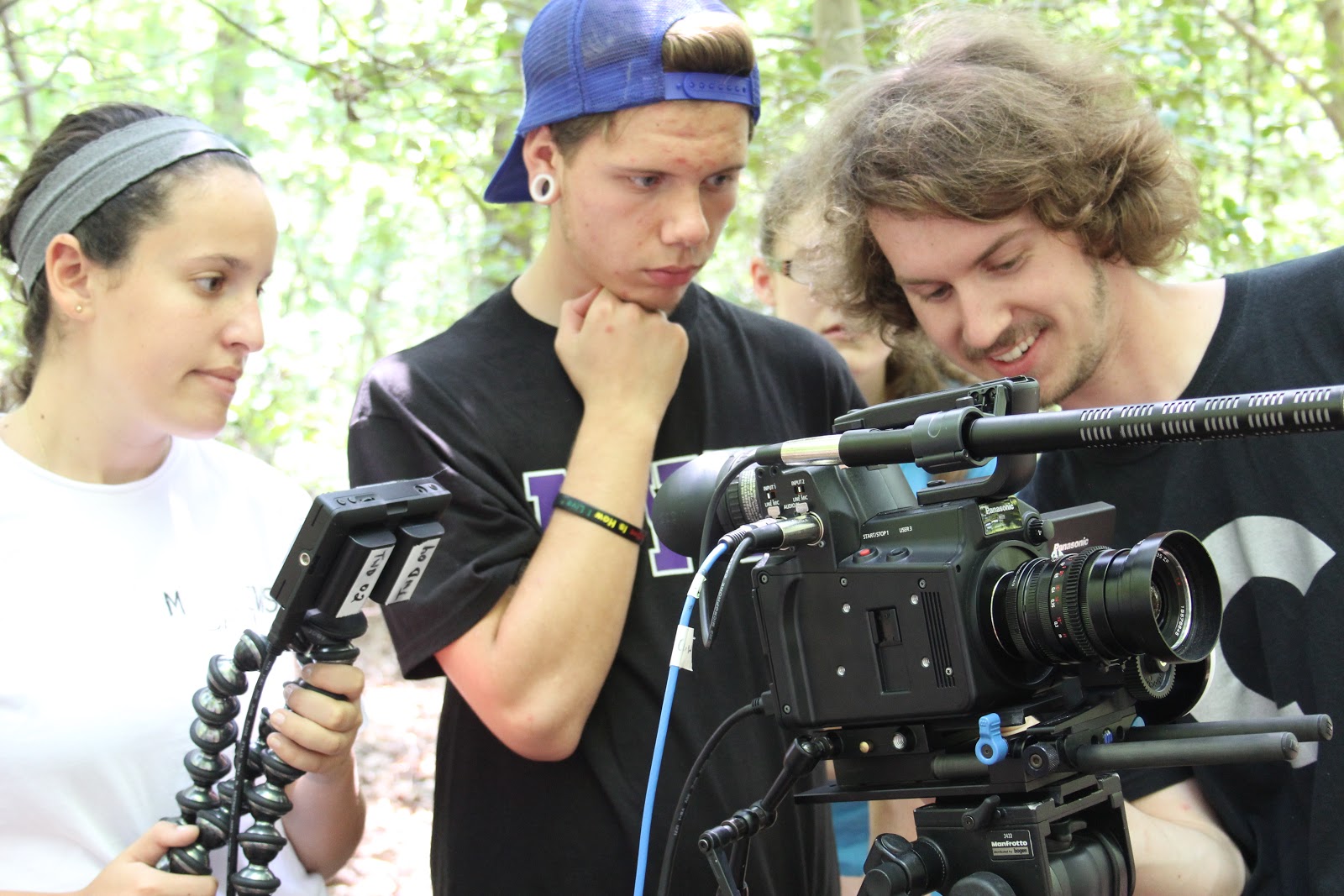
If you or someone that you know has a child interested in film or filmmaking, why not suggest that they sign up for FILMSTERS ACADEMY? www.filmstersacademy.com. In existence for 12 years, this summer film camp for kids 11-20 is a hands on experiential filmmaking program. It takes place in Annapolis from July 29th through August 9th.

It all begins on day one with an idea...each student is asked to pitch their idea for a short film to the whole camp. Ideas are voted on and the most popular ones are made. Small groups are developed and kids choose their jobs. It is all very democratic.

There are three levels of instruction... Beginners, Intermediates and Advanced filmmakers.  This is a picture from last summer's Advanced shoot for FLEW THE COOP. Director, Annie Schwartz is on the left, DP Antonio Marasco is being guided by Supervising Director of Photography, Tyler W. Davis.

This is the crazy cast of SUPER REDNECK VAMPIRE ZOMBIES FROM OUTER SPACE!


The Advanced class shoots a scene at Annapolis' Double T Diner with guest instructors supervising.


Acting coach, Paul Richardson, poses for a funny shot after Erica Rowe has applied special effects makeup.
A special effects shot is staged in front of a green screen with the assistance of guest instructor, Rick Kain, professional stuntman and stunt coordinator.


Lots of editing takes place in order to complete the films in time for the festival. Film camp teaches hands-on of final cut pro editing software on the latest mac computers. A student is guided by editor, Erica Rowe.


Jeff Gerheiser, Operations at FILMSTERS Academy MC'd the film festival and introduced all ten short films for an audience of over 500!!!

Friday, February 15, 2013

Be Sure to See...Part 2


Only the Young, to be shown at the AFF, has just been named one of the top five docs of 2012 by the National Board of Review of Motion Pictures.

Only the Young introduces us to three Southern California teenagers living in a small desert town known for its foreclosed homes and empty swimming pools. The town's single saving grace is its skate parks. Through these vulnerable, articulate, and rebellious youths, audiences get a close-up look at this generation's hopes and dreams as they learn the importance of friendship.


Combat Girls, Marisa, a 20-year-old working-class German, loves and hates with equal passion. When 14-year-old Svenja joins Marisa's violent Neo-Nazi group,  the older girl incorporates Svenja's ideal of combat girl fighting into the group's ideology. But things change when Marisa encounters a young Afghan refugee. Authentic, brutal, and powerful, Combat Girls explores the gritty, complex nuances of national and personal identity; love, family, and friendship.


Wednesday, February 6, 2013

Behind The Scenes


Meet AFF’s founding members and Co-Creative Directors, Patti O. White and K. Lee Anderson.

Patti has been a producer/director/writer in the fields of TV, journalism and film for over 30 years and is co-owner of Filmsters, a TV and film production company in Annapolis, which is currently developing and producing several documentaries and series.

For three seasons, she was Producer and Senior Producer for ABC’s Extreme Makeover, a People’s Choice Award-winning show. She spent over 15 years at CBS News in New York where she produced 60 Minutes and CBS Reports and received three National Emmy Awards, three additional Emmy nominations and the coveted George Foster Peabody Award. Patti produced and directed the multi-award winning 2001 feature documentary, If I Could, narrated by Sally Field. She has served on the Board of Directors for the Boys and Girls Clubs of Annapolis and Anne Arundel County for 17 years.

Lee is a Producer and Line Producer who began her career as a news and commercial producer for ABC and CBS affiliates in Maryland before joining Filmsters in 1994.  Her credits have appeared on ABC (Extreme Makeover), CBS, TBS, Lifetime TV, Discovery Health and Current TV.
Lee just completed production of a national event for Google. As a producer on the award-winning documentary, If I Could, Lee spent many months on the festival circuit.

Lee and Patti are co-founders of Filmsters Academy, an annual filmmaking program for young people between the ages of 11-20.


- Annapolis Film Festival

Tuesday, February 5, 2013

Follow AFF on Twitter!

Want to keep  up with all the latest news from the Annapolis Film Festival? Follow us on Twitter at https://twitter.com/annapolisff


- Annapolis Film Festival

Monday, February 4, 2013

Be Sure to See.... Part 1


Among the many films being featured at the Annapolis Film Festival, be sure to see...

Charles Bradley: Soul of America, 
which charts the extraordinary late-in-life success story of 62-year-old soul singer Charles Bradley. His debut album rocketed him from homelessness and tragedy to Rolling Stone magazine's top 50 albums of 2011. Thefilm tracks the volatile months between his 62nd birthday and his album release and world tour. Bradley's incredible transformation from a James Brown impersonator to a soul legend was a dream in the making for 48 years. Prepare to be inspired! The film's director, Poull Brien, will be a guest at the Festival. For a taste of Charles Bradley's gut-wrenching sound, listen to him singing "Heartache and Pain" with the Menahan Street Band here.


Get Together Girls, the true story of six former Kenyan "street" girls who became fashion designers. After graduating from their "home for marginalized children," the girls are taken under the wing of Grace Orsolato who teaches them to sew. Now, with their Get Together collection of fashionable women's attire, their future is secure.


The Exquisite Corpse Project, a comedy/drama/doc/thriller/action movie/buddy picture/heist flick! Five comedy writers met the challenge of writing 15 pages each, after reading only the previous 5 pages. You've not seen anything like this before. The movie resonates emotionally and is consistently laugh-out-loud funny! These comedic filmmakers will be on hand to do some stand-up comedy, live at AFF. 


- Annapolis Film Fest


Wednesday, January 23, 2013

Come & Meet: Ambassador Shabazz


Ambassador Shabazz, producer, writer, diplomat, and the eldest daughter of Dr. Betty and Malcolm X Shabazz. A member of the AFF advisory committee, she will lead a panel discussion at the Banneker-Douglass Museum on the African-American experience in education. 

Ms. Shabazz is the founder of the Malcolm X Shabazz Birthplace & Foundation and a frequent contributor to Time, Essence, El Mundo, and other publications. In 1999 she penned a new foreword to her father's classic, The Autobiography of Malcolm X.


____________________________________________________________________________________


SNEAK PREVIEW

The first annual Annapolis Film Festival will transform Annapolis into Hollywood-on-the-Chesapeake for one magical weekend, March 21-24. Programmers are making final selections from nearly 400 submissions from countries around the globe-Iran, Italy, South Africa, Bolivia, Uganda and Israel among them.

- Annapolis Film Festival